It should make customers feel safer choosing you, and hold your business to a higher standard.
A lot of good businesses already stand behind their work. They just haven’t put it into words.
Ask a good operator what happens if a customer rings tomorrow and says something isn’t right. Most will say something like:
“We’d go back and sort it.”
That’s basically a guarantee.
The problem is, the customer choosing you for the first time doesn’t know that yet.
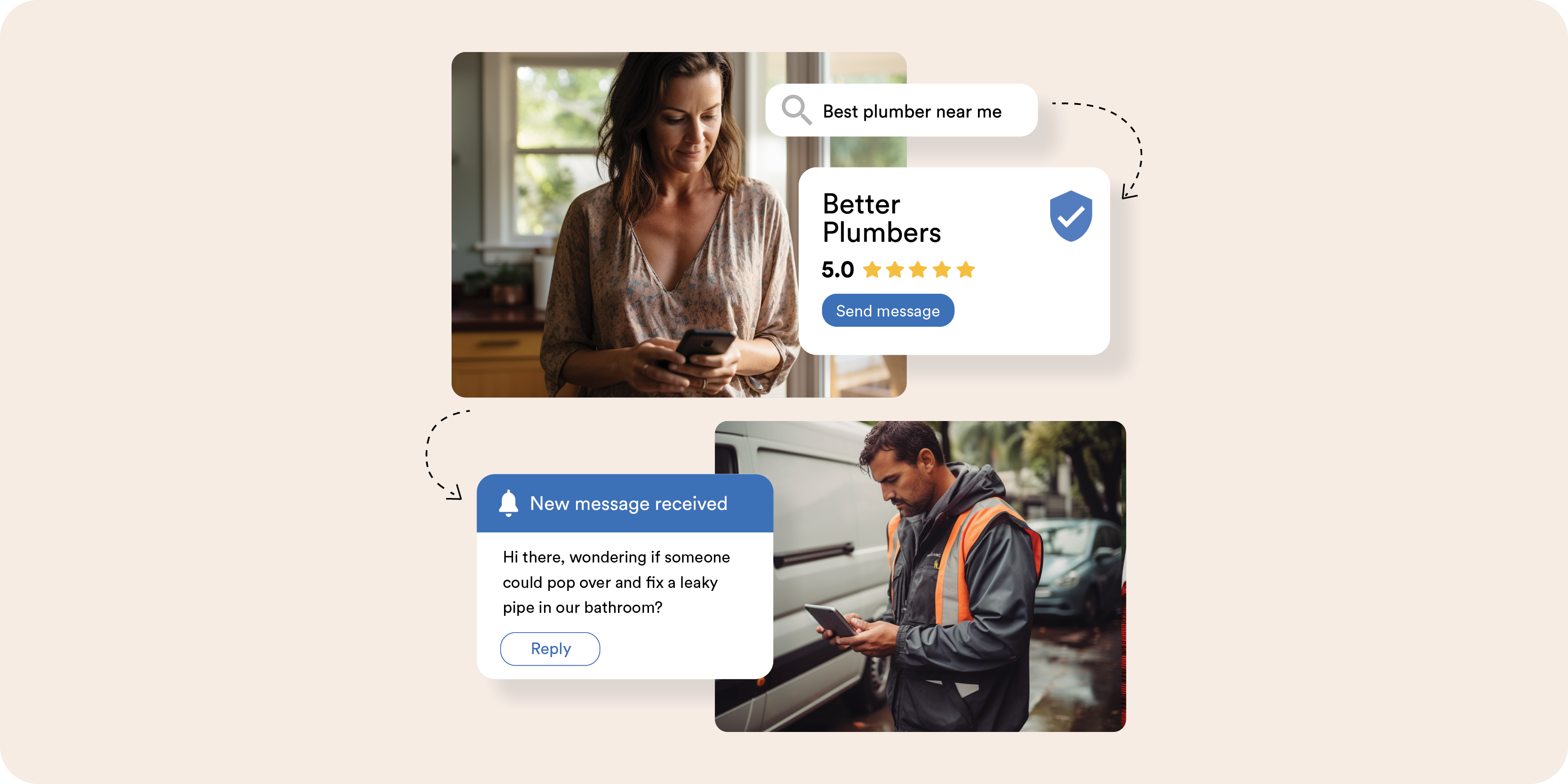
They’re looking at your reviews, your quote, your website, maybe a couple of other businesses, and trying to work out who they feel safest going with.
Imagine two businesses look equally good and cost about the same.
One gives you the quote.
The other adds:
We stand behind our workmanship. If something isn’t right because of work we’ve carried out, let us know and we’ll come back and put it right.
You’re probably not sitting there expecting the job to go wrong. But if it does, you already know what happens.
That makes the second business a little easier to choose.
That’s the first job of a good guarantee: take a worry off the customer’s plate.
But this is where it gets more interesting. A really good guarantee should put some pressure back on the business too.
If you’re going to tell customers, “This is what you can expect from us,” you need to be pretty sure you can deliver it. And if you put something meaningful behind that promise, you suddenly have a very good reason to keep your standards high.
The best guarantees lower the customer’s risk and raise your standard.
If you want to build one that actually means something, there are four questions to answer: What are we promising? What will we do if we miss it? How quickly will we act? And what happens if we still don’t follow through?
1. Start with something worth guaranteeing
Before you think about refunds or putting money on the line, decide what you actually want customers to be able to count on.
Not vague stuff like:
“Great service.”
or:
“Quality workmanship.”
Think about the things customers genuinely worry about when they hand a job over to someone.
Things like:
No surprise bills. We won’t charge you for extra work without getting your okay first.
We do what we say. If we agree to a date or deadline, we’ll stick to it — or tell you before it changes.
We finish the job properly. We don’t call it done until the work matches what we agreed and has been checked.
Those promises mean something.
A customer can read them and think, “Good. I don’t have to worry about that.”
And they’re clear enough that your team knows whether you delivered them or not.
That’s what you’re looking for: something the customer actually cares about, that you control, and that you’re prepared to be held to.
Once you’ve got that, the next question is pretty simple.
2. What happens when you miss it?
Good businesses get things wrong sometimes.
The important bit is what happens next.
Saying:
We stand behind our work.
sounds nice.
Saying:
If something isn’t right because of our workmanship, we’ll come back and put it right at our cost.
means something.
Now the customer knows what happens if you miss the standard.
And your team does too.
Maybe you redo the work. Maybe you replace something. Maybe you refund the affected part of the job. The right fix will depend on what you do.
The important thing is that it’s clear.
Because “we’ll look after you” isn’t much of a guarantee if nobody knows what “looking after you” actually means.
3. How quickly will you act?
This one matters more than businesses sometimes realise.
You can genuinely intend to put something right and still leave the customer feeling terrible if they have to chase you for two weeks to make it happen.
“We’ll sort it” could mean tomorrow.
It could also mean three weeks from now when things quieten down.
You might not always be able to promise exactly when the problem will be completely fixed. You could need parts, another visit or more information.
But you can decide how quickly someone will take ownership.
For example:
If something isn’t right, let us know and we’ll get back to you by the next business day to organise how we’re going to put it right.
Now the customer knows they won’t be left wondering whether anyone is dealing with it.
And inside the business, there’s a clock running.
Someone needs to own it. Someone needs to call the customer. “We’ll get to it when we can” doesn’t really cut it anymore.
That’s already starting to raise the standard.
4. What happens if you still don’t follow through?
This is where a guarantee can really start changing how the business operates.
You’ve said what the standard is.
You’ve said how you’ll put it right if you miss it.
You’ve said how quickly you’ll act.
Now ask:
What happens if we don’t do that either?
Maybe you refund part of the job.
Maybe you waive the fee.
Maybe there’s a fixed amount of money attached to the promise.
And if you’re really confident in your business, maybe it’s something that feels pretty serious.
Imagine telling a customer:
If we don’t put it right within the time we promised, we’ll pay you $10,000.
You probably never want to pay that $10,000.
That’s kind of the point.
Think about what happens inside the business now.
The job gets checked properly. Everyone gets clear on what was promised before the work starts. Problems get picked up earlier. Someone owns the complaint. The customer gets called back. Fixing something stops being a job you’ll squeeze in when things quieten down.
Nobody wants the guarantee triggered, so the business gets very good at making sure it isn’t.
That doesn’t mean every business should put $10,000 on the line. The consequence needs to make sense for your business, and you should only promise something you genuinely intend and can afford to honour.
But there should be enough behind the promise that missing it actually matters.
If breaking your guarantee changes absolutely nothing for the business, it probably won’t do much to raise your standard either.
This is where it gets really useful
Say your guarantee is:
We stand behind our workmanship. If something isn’t right because of our work, we’ll get back to you by the next business day and put it right at our cost. If we don’t do what we’ve promised, we’ll refund $X.
That sounds pretty simple.
But think about what needs to be true inside the business for you to confidently say it.
Someone needs to own the call.
The team needs to know what counts as a workmanship problem.
Whoever deals with the customer needs enough authority to actually sort it.
You need to be able to make room for the odd comeback, even when you’re busy.
And if there’s something meaningful on the line when you don’t follow through, you’re going to care about all of that a lot more.
Suddenly a simple promise to the customer has made you tighten up the way the business works.
That’s the bit we like about a good guarantee.
It isn’t just saying:
“Trust us.”
It’s making sure the business deserves that trust.
Try this with your team
Ask three people in the business, separately:
A customer rings tomorrow and says we haven’t lived up to our guarantee. What happens next?
Then compare the answers.
Do they agree on what went wrong? Who owns it? What you’ll do to fix it? How quickly the customer hears from you? What happens if you still don’t follow through?
If you get three different answers, you’ve just found something worth fixing.
The guarantee didn’t create the problem.
It exposed it.
There’s another good test:
Could we still honour this on our busiest week of the year?
It’s easy to stand behind your work when the diary is quiet.
The promise matters when you’re flat out, something has gone wrong and going back is a pain.
If you can still say:
“Yep. We’d sort it.”
you’ve probably got something worth putting your name to.
Put it where customers will actually see it
If the guarantee is meant to give someone more confidence choosing you, don’t hide it in the terms and conditions.
Put the plain-English version where the decision happens.
On the quote. On the website. In the proposal. Alongside the reviews and previous work you’re already using to show people they can trust you.
It doesn’t need a giant 100% GUARANTEED badge.
It just needs to be clear.
Write yours
Start with four questions:
What are we willing to promise customers?
If we miss that standard, how will we put it right?
How quickly will we act?
If we still don’t do what we promised, what are we willing to put on the line?
Then ask yourself two things:
Would seeing this make a first-time customer feel safer choosing us?
and:
Would having to live up to it make us a better business?
If the answer to both is yes, you’re probably onto something.
A quick NZ note: your own guarantee doesn’t replace any legal obligations that already apply to your business. Only promise something you genuinely intend and are able to honour, and get advice if you’re unsure.
A good guarantee works both ways
Don’t start by asking:
“What guarantee would sound good on our website?”
Ask:
What are we prepared to promise, and how far are we willing to back ourselves on it?
Get that right and you’ve got something much more useful than a nice bit of marketing.
You’ve given the customer another reason to feel good choosing you.
And you’ve given the business a very good reason to keep its standards high.
Lower their risk. Raise your standard.