.png?width=120&height=121&name=CustomerHappy_V2%20(4).png)

Why Isn’t AI Recommending My Business?
The way people search for local businesses is starting to change.
A customer who used to opened Google and search “electrician Hamilton” or “dentist near me” now opens an AI tool and ask a much more conversational question, like “I need an electrician in Hamilton who is good with older homes. Who would you recommend?”
Instead of presenting a list of links, tools like ChatGPT can search the web, bring together information from multiple sources and give the customer a shortlist of businesses to consider, along with an explanation of why those businesses might be suit what they're looking for.
For business owners, that creates an obvious question.
When someone asks AI who they should call, does my business appear?
Running your own "test search" can be a useful exercise, but the result needs to be interpreted carefully. A recommendation from ChatGPT is not an official league table of the best businesses in town, and failing to appear in one search doesn't mean your business has been permanently ranked below the businesses that did.
OpenAI explains that ChatGPT Search ranks search results using multiple factors intended to help people find relevant and reliable information, and that placement in search results isn't guaranteed. Search can also take the wording of the question, available web sources and location information into account, which means changing the question or searching from a different location can produce a different result too.
The useful part of the "test search" exercise, then, is not asking whether you ranked first, fifth or not at all.
The better question to ask is rather:
What information could AI find about the businesses it recommended, and how does that compare with the information it can find about my business?
That comparison can reveal some very practical opportunities to improve the way your business is represented online.
Start by testing how your business appears
Open ChatGPT, make sure Search is being used, and ask a question that resembles something a genuine prospective customer might ask.
A good starting point is:
“I’m looking for a [type of business] in [town]. Recommend five local businesses I should consider. Tell me why you picked each one and show me the sources you used.”
Including the location is important because local intent changes the question significantly. OpenAI says ChatGPT Search can use approximate or shared location information to improve local results, and users can also specify a city, neighbourhood or postcode directly when they want more relevant local recommendations.
Once you have your results, resist the temptation to treat the order as a scorecard.
Instead, start reading.
If your business appears, look closely at the explanation ChatGPT gives for recommending you. What does it appear to understand about your business? Which services does it mention? Which parts of your reputation stand out? Which sources did it use to support those points?
And if your business doesn't appear, do exactly the same exercise with the businesses that did.
The goal is to understand the evidence behind the recommendation.
Look at the sources, not just the names
One of the most useful features of ChatGPT Search is that responses can include citations and links to the sources used to build the answer. Rather than accepting the recommendation at face value, open those sources and see what information was actually available.
You might find that ChatGPT relied on a business’s own website to understand its services, an industry directory to confirm its location or credentials, customer reviews to understand its reputation, or a credible third-party website that mentioned the company.
This is where things get exciting!
Imagine you run a solar installation company and one of your competitors appears in ChatGPT’s recommendations.
When you look at the sources, you can see why. Their website clearly says they install residential solar systems across Waikato. It explains the products they work with, and shows they’ve been in business for years. Their customer reviews also back that up, with people regularly mentioning knowledgeable advice and tidy installations.
Put together, that gives ChatGPT a clear picture of who they are, what they do and why customers trust them.
You may know that your own business does all of those things just as well, or better.
But if your website simply says “quality energy solutions,” your service area is difficult to find, your main services are tucked away on one page and your reviews rarely explain what work was completed, the reason you're not appearing is simply because there is less clear information available for an AI search to work with.
That distinction is important.
Being a great business and clearly communicating why you are a great business online are two different things.
The purpose of this test is to find the gap between the two.
Check whether your website clearly explains what you do
Your website is one of the most important places to start because it should provide a clear, first-hand explanation of your business.
A prospective customer arriving on the site should be able to understand what you do, where you work and what kinds of customers you help without having to piece that information together themselves.
The same principle is useful when it comes to AI search.
Consider the difference between a homepage that says:
“Quality solutions you can trust.”
and one that says:
“Residential and commercial electricians servicing Hamilton and the wider Waikato.”
The first statement might sound polished, but it carries very little information. It doesn't tell the reader what the business does, where it operates or whether it is relevant to their particular problem.
The second statement immediately establishes the service, the customer type and the location.
That does not mean your website needs to be rewritten for robots or stuffed with awkward search phrases. In fact, "keyword cramming" usually makes the website less useful for the people who actually need to read it.
It simply means that clarity matters.
If somebody lands on your website and has to hunt around to understand what your business actually does, there is a good chance AI is having the same problem.
Make sure the services you want to be known for are actually explained
Another common problem is that businesses provide a wide range of services but barely mention them online.
An electrician might install EV chargers, replace switchboards, carry out renovations, complete commercial maintenance and provide emergency callouts, while their website describes all of this using one sentence: “We provide all electrical services.”
A potential customer may understand roughly what that means, but it gives them very little information if they are specifically researching EV charger installers.
The same issue applies when somebody asks ChatGPT a specific question like:
“Who installs home EV chargers in Hamilton?”
If one business has a clear page explaining its EV charger installation service, the areas it covers and the type of work involved, while another simply says “all electrical work,” the first business has made its relevant information considerably easier to find and understand.
Take a look at the services you most want customers to contact you about and ask whether those services are properly represented online.
You don't necessarily need a separate webpage for every small task you complete, but your important services should be named and explained somewhere obvious.
A useful rule is this: if a service is commercially important to your business, a prospective customer should not have to guess that you offer it.
Be clear about where you actually operate
Location information becomes particularly important when the customer is asking for a local recommendation too.
OpenAI says ChatGPT Search may use approximate location information when it generates local results, and users can improve those results by specifying their city, neighbourhood or postcode. That means a question about “a plumber in Cambridge” is fundamentally different from a general question about plumbers.
Your online presence should make those same geographic details easy to understand.
If your company is based in Hamilton but regularly services Cambridge, Te Awamutu and Morrinsville, explain that clearly on your website. If customers visit a physical premises, make sure your address and opening information are accurate. If you operate as a service-area business and travel to customers, make the areas you cover easy to find.
This is another area where it is easy to overdo things.
You do not need a footer containing every suburb in the North Island or dozens of nearly identical pages with a different town name swapped into each one.
The aim is not to manufacture location signals. It is to accurately explain where your business operates so that both customers and search tools can understand whether you are relevant to a local enquiry.
Pay attention to the language your customers use in reviews
Your website explains what you say about your business. Customer reviews can provide a different type of information because they describe what people actually experienced.
This is one reason reviews are worth examining as part of the "test search" and comparison exercise.
A review that simply says, “Great company, five stars,” is positive, but it tells a reader very little about why the business was good.
Compare that with a genuine customer review that says the electrician replaced an old switchboard, arrived when promised, clearly explained the work and left the house tidy afterwards.
That review contains much more context. It tells prospective customers and AI Search what kind of job was completed and which parts of the experience stood out.
When you look at the businesses ChatGPT recommended, pay attention to the patterns in their reviews. Are customers consistently talking about a particular service? Are they mentioning communication, reliability, workmanship or speed? Is there enough recent feedback to give somebody researching the business a clear sense of what customers experience?
Then compare that with your own reviews.
This does not mean telling your customers what to write or asking them to include particular search phrases. Reviews should be genuine and written in the customer’s own language.
Instead, focus on consistently inviting real customers to share their experience. Over time, their natural descriptions build a much richer picture of what your business actually does and what people value about working with you.
Check that your business information is current
An AI search can draw on information from many different parts of the web, which makes outdated or conflicting business information worth fixing.
Start with the basics.
If your business has changed its phone number, moved premises, added new services or changed its opening hours, make sure the main places customers find you have been updated.
The information on your website, Google Business Profile and credible industry or business listings doesn't need to use identical wording everywhere, but it should tell the same basic story.
Imagine a customer researching a business and finding one address on the website, another address on an old directory profile and opening hours that have not been updated for years.
Even if the business itself is excellent, the online evidence is making the customer do extra work to decide which information they should trust.
Clarity and consistency remove that friction.
Look beyond your own website
A strong online presence is not created entirely by what you say about yourself.
Credible third-party mentions also help establish information about a business.
When you inspect the businesses ChatGPT recommended, look at whether they appear on other reputable websites. They might be listed by a professional association, included on a manufacturer’s approved installer page, mentioned by a local organisation, featured in a news article or listed in an industry directory.
The important word here is credible.
This is not a reason to rush out and submit your business to hundreds of low-quality directories because someone has promised you “AI backlinks.”
Instead, think about the organisations and websites that hold status and genuinely have a reason to reference your business.
If you are an accredited installer for a product manufacturer, make sure your installer profile is current. If you belong to a professional association, check that your membership listing is accurate. If your business sponsors a local club or works closely with an industry partner, there could be a legitimate opportunity for that relationship to be represented online.
Good third-party information usually starts with something real.
Ask ChatGPT to help you compare the evidence
After you have reviewed the initial recommendations yourself, take the "test search" exercise one step further.
Try asking:
“Compare these businesses with [your business]. Based only on the sources you can find online, what information is clearer or better supported about the businesses you recommended?”
That wording matters because you are not asking ChatGPT to decide which company is objectively better.
It can't inspect the workmanship, meet the team or know whether one business would actually provide a better customer experience.
You're asking it to compare the information available online.
The response might show that one competitor has clearer information about its service area, another has more detailed information about a particular service, and another has a stronger collection of reviews describing the type of work it completes.
Those observations give you something concrete to investigate.
Just remember that the AI response itself shouldn't be treated as unquestionable fact. OpenAI advises users to review search citations because search results and sources can sometimes be incomplete, outdated or incorrect.
Open the links, read the evidence and use your own judgement.
Decide which improvements actually matter
Once you start comparing your business with others, it is very easy to create an enormous to-do list.
You might find that one competitor has hundreds more reviews, another has a really clear website, another appears on several industry sites and somebody else has written detailed pages about every service imaginable.
Trying to copy all of that at once is unlikely to be useful.
Instead, choose one to three areas where improving the underlying information would make your business meaningfully easier to understand.
For one business, that might mean rewriting the homepage so it clearly explains the company's services and service area.
For another, the biggest gap might be an inconsistent review process, meaning excellent customer experiences are happening every week but almost none of them are visible online.
For another, the website might already be excellent, but old directory listings and outdated profiles are creating conflicting information around the web.
Choose the improvements that address the clearest gaps first.
You can always come back for another round later.
Improve the source information, not the AI answer
This is the principle worth remembering if you take nothing else from this guide.
Do not try to optimise the answer ChatGPT gives. Improve the information it has available to find.
There is a growing amount of advice online about “ranking in AI,” and some of it treats AI recommendations as though there is a secret phrase, prompt or technical trick that will guarantee a business gets mentioned.
OpenAI doesn't make that promise. Its own guidance says that ChatGPT Search uses multiple factors intended to help find relevant and reliable information and that placement isn't guaranteed.
That means claims like “we can guarantee your business appears first in ChatGPT” should be treated very carefully.
A much more sensible approach is to concentrate on the information you can control.
Make it easy to understand what your business does. Explain your important services properly. Clearly state where you operate. Keep your business information up to date. Build a steady stream of genuine customer reviews. Make sure legitimate third-party profiles and memberships represent your business properly.
None of those things are an “AI hack.”
They are simply good reputation and online presence practises, and they are useful whether the person researching your business is using ChatGPT, Google or their own browser.
Retest, but don't expect identical results
After making improvements, give those changes time to become available online before running the test again.
Then repeat the "test search" exercise.
Start with the same broad prompt, but it is also worth testing more specific questions that resemble the search enquiries you want to win.
An electrician might try:
“Who would you recommend for an EV charger installation in Hamilton?”
A dentist might ask:
“Which family dentists in central Auckland have strong customer reviews?”
A mechanic might try:
“I need a mechanic in Christchurch and good communication is important to me. Which businesses should I consider?”
These questions are useful because customers don't always search by category alone. They often include a specific problem they need solved, the location they are in and the qualities they care about.
Do not worry if the exact list changes between searches. Because the wording, context, location and information available on the web can influence the answer, some variation is to be expected.
What you are looking for over time is not a guaranteed ranking.
You are looking for whether your business has become easier to discover, understand and support with credible evidence.
The bigger lesson:
Make your reputation easier to understand online
AI hasn't suddenly made websites, business profiles or customer reviews irrelevant.
In many ways, it has made the information in those places even more important.
A customer no longer has to personally open your website, read ten reviews, check an industry directory and compare four competitors. They can ask an AI tool to help bring some of that information together for them.
That changes the customer journey, but it doesn't change the underlying question.
The customer is still trying to work out:
Who are you, what do you do, where do you work and why should I trust you?
The businesses that make those answers clear online give customers (and the tools helping those customers research) more useful information to work with.
You might already be doing excellent work.
You might have customers who would happily recommend you to anyone who asks.
The important question is whether that reputation is visible enough online for somebody who has never met you to understand it.
That is where to start.


Get a free reputation audit
Schedule a 1:1 call today and discover how to win on trust.
Success!
When it happens next? Based on what we find, one of the team will either give you a quick shout to walk you through the plan, or we'll just email the full advice pack straight over to you.
Either way, we'll make sure you get the best bits of advice to start winning on trust straight away.
Articles you might like
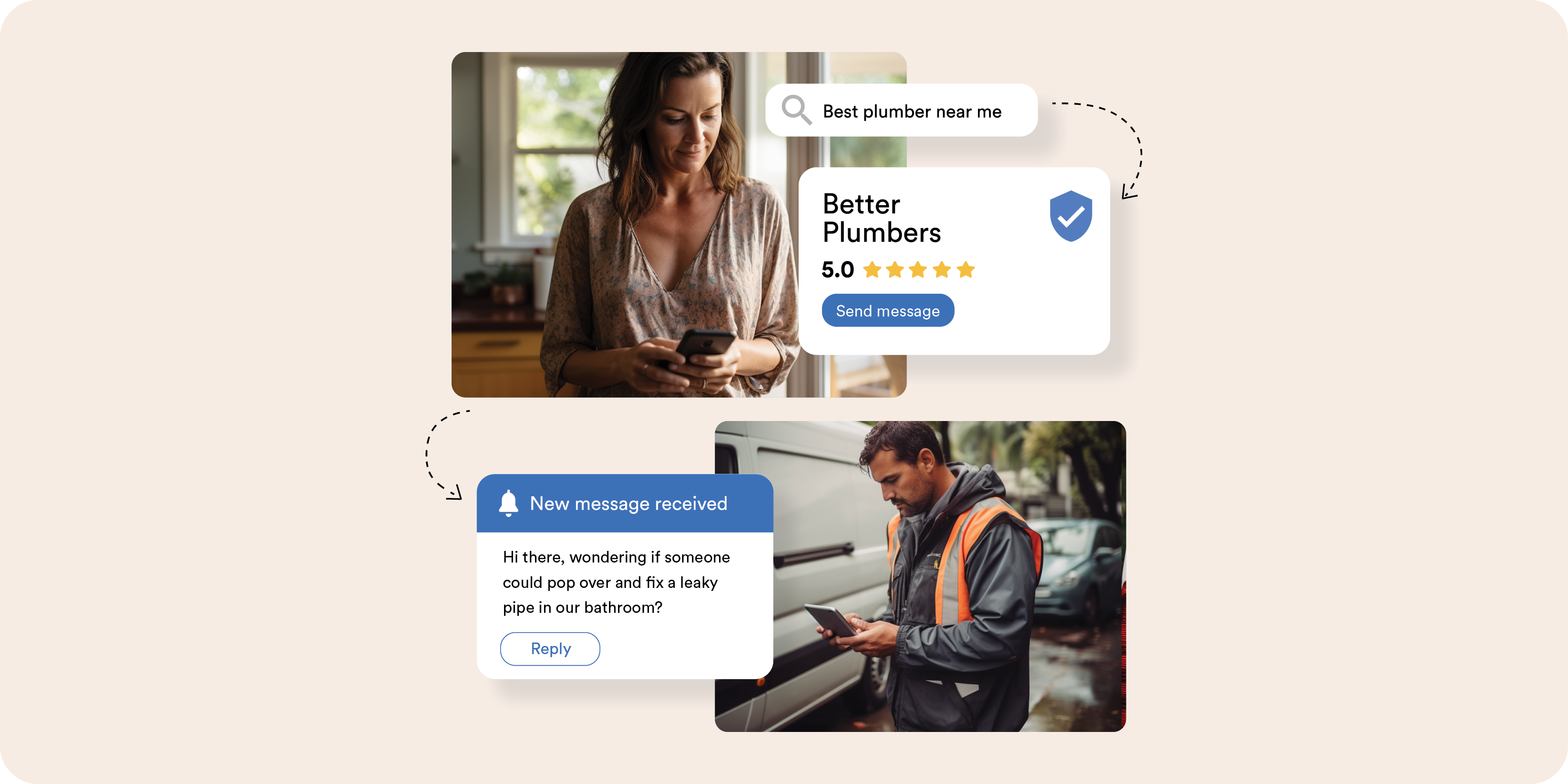
Leveraging Google Business Messages to increase customer engagement
Important note: As of July 31, 2024, Google Business Messages is no longer available. Google Business Messages, a feature of Google Business Profile (GBP), allows you to add a click-to-message ...
Read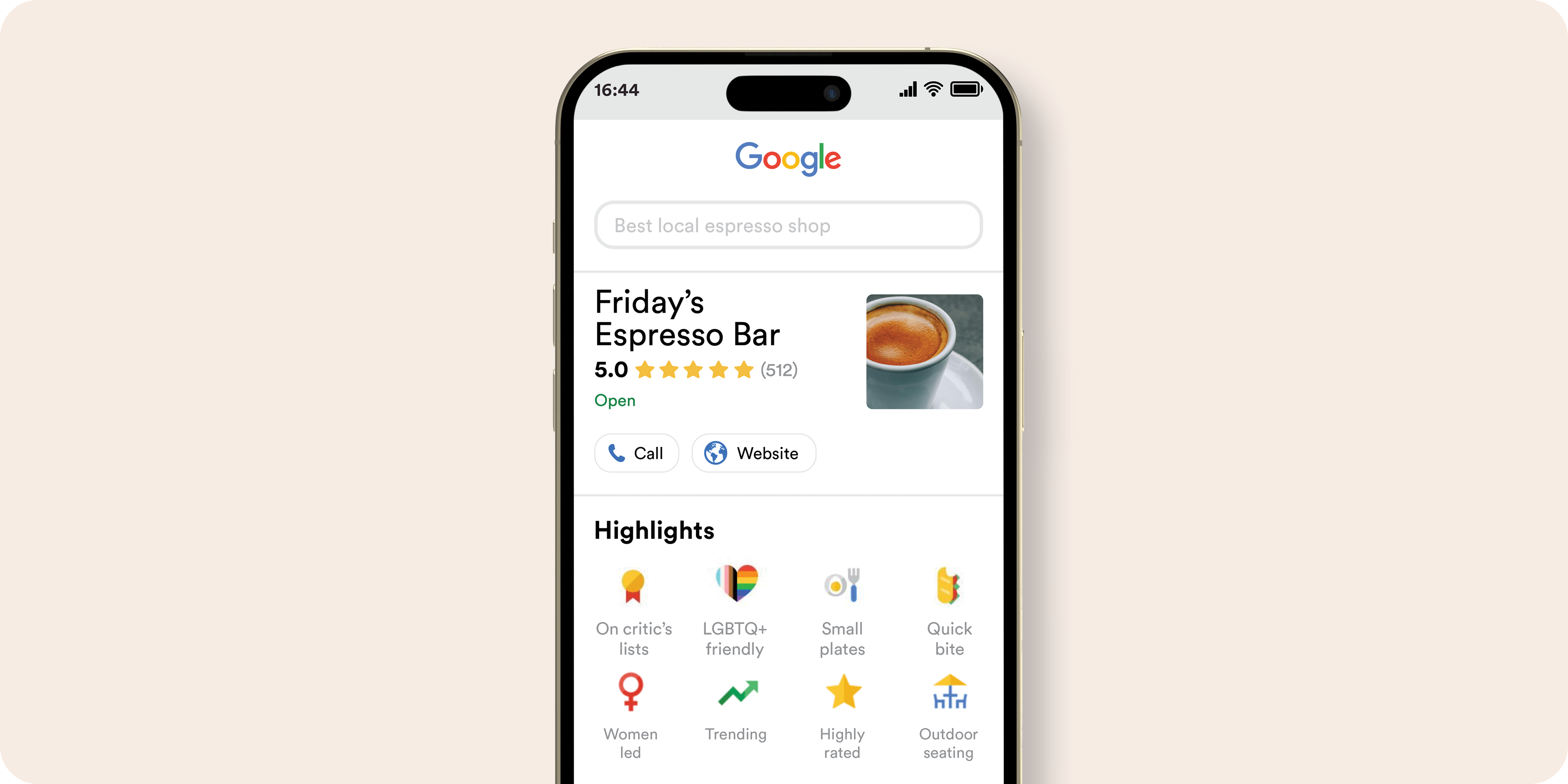
Your guide to Google Business Profile Attributes
Google Business Profile Attributes are essential descriptors that provide your customers with a better understanding of your business.
Read
How Cowleys Hire gathers feedback from 50+ customers per month
Cowleys Hire is a third-generation, family-owned business and the longest-running hire company in New Zealand. With four busy locations and 35+ staff, they’re a trusted name throughout Northland.
Read.png?width=768&height=591&name=TeamBrainstorm_Blue%20(1).png)
Get your trust wins.
We’ll take a proper look at your Google profile and send a short video with 3 simple fixes you can apply straight away to strengthen your local reputation. No sales pitch — just clear, practical advice.
Where should we send your video?
Share your details below and we’ll get started. You’ll hear back within 2 business days. No spam, no pushy follow-ups.
All set — we’re onto it.
One of the team will email you within two business days to confirm we’ve got the right business.
Once that’s confirmed, we’ll record and send your personalised video with clear, practical fixes to help you win more trust straight away.